Tools That Don't Make the Art
The AI art tools that matter are the ones nobody funded
The Unorthodox Angle
The best AI art tools are invisible — they support the hand, not replace it. And when they work, nobody talks about the AI. They talk about the drawing.
There's a category of AI art tools that I find genuinely interesting, and it's not the one getting the funding.
Most AI art platforms want to generate the finished piece. You type a prompt, the model produces an image, and you post it. That's a product. It's also a dead end for most working artists, because it skips the part they actually care about — the making.
The tools I've been building take the opposite position. They don't make the art. They support the human who does.
Desktop Tracer
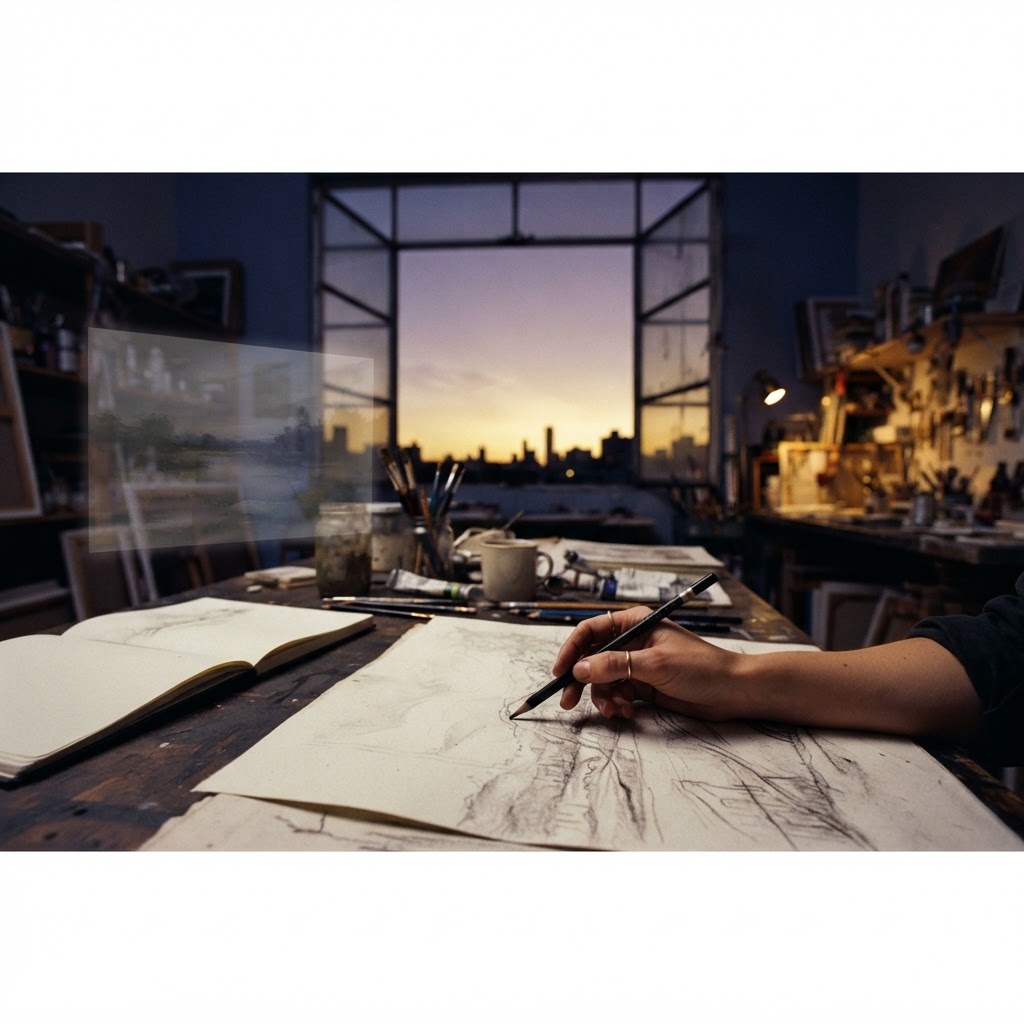
I built Desktop Tracer because I needed a tracing tool that worked in the browser. The concept is simple: overlay a reference image on your live camera feed so you can trace it by hand. No projector, no lightbox, no printing.
What surprised me was how quickly it became something more than a tracing aid. The project data tells the story:
- Williamston Water — An AI-generated reference image of a Midwestern town with cornfields, loaded at 42% opacity, traced by hand. The reference wasn't the art. It was the starting point.
- Figure Drawing — A photo reference loaded at 62% opacity with contrast dropped to 60% and saturation to 31%, being traced by someone learning anatomy. The camera filters aren't decoration — they're how you make a reference useful for hand-drawing.
- Outer Space — A screenshot loaded at 36% opacity. Almost ghostly. The tracer barely sees the reference; it's just enough to guide the hand.
Each project has golden ratio overlays, rule-of-thirds grids, perspective grids, and a loupe that can zoom up to 4x. These are compositional tools that come from traditional art education — the kind you'd find in a drawing textbook, not a tech product.
The unorthodox move here is that the AI generates the reference, but the human makes the drawing. The tool sits in between. It's not replacing the hand. It's giving the hand something to work from.
The Broader Pattern
Desktop Tracer isn't alone in the Creatorverse. There's a whole set of tools that follow the same logic:
MUUZ pulls from museum collections and learned preferences to deliver daily visual inspiration. It doesn't generate art. It surfaces references — work that already exists, curated by an AI that learns what you respond to.
Mosaica takes a photo and generates a mosaic pattern — not as a finished product, but as a design reference for actual fabrication. Ceramic, glass, stone. The output is a blueprint, not a product.
Color Collector pulls color palettes from photos of the real world — a brick wall, a moth wing, a half-rotten fruit. It's an antidote to the same five hex codes that show up in every brand deck. The AI finds the colors; the human decides what to do with them.
ArtFlow Timelapse captures webcam timelapses of art projects automatically and stitches them into process videos. It's project management for artists who want to document their work without stopping to document their work.
None of these tools produce finished art. All of them support the person who does.
Why This Matters
The AI art conversation is stuck on a binary: either AI replaces artists, or it doesn't. The more interesting frame is: which parts of the creative process can AI support without taking over?
Reference generation. Color extraction. Composition guidance. Process documentation. Inspiration curation. These are all things that working artists already do — usually badly, usually manually, usually with tools that weren't designed for the job. AI can do them faster and sometimes better.
But the actual mark-making — the hand on the paper, the knife in the paint, the decision to stop interrupting the face that's already surfacing — that stays human.
The Tools People Actually Use
I can see the usage data. Desktop Tracer has multiple users working on different projects — figure drawing, landscape tracing, compositional studies. They're not generating images and posting them. They're loading references, adjusting opacity, turning on golden ratio guides, and drawing by hand.
That's the test. Not whether the AI can make something impressive. Whether the tool gets used by someone making their own work.
The best AI art tools are invisible. They support the hand, they don't replace it. And when they work, nobody talks about the AI. They talk about the drawing.