The Unorthodox Angle
The studio isn't a place anymore. It's a system. And the system can be designed, built, and improved the same way you'd design, build, and improve a product. The studio itself is a creative artifact.
I didn't set out to build a studio. I set out to solve problems.
The photography pipeline came first. Then the garage sale app for the kids. Then the tracing tool. Then the mosaic generator. Then the proposal writer. Then the identity compiler. Then the timelapse tool. Then the inspiration engine. Each one solved a specific problem I was having or someone I knew was having.
At some point I looked up and realized I had 36 apps. Not 36 products. 36 tools. Each one did one thing well. None of them were the studio. But together, they were the studio.
This is a piece about what happens when your creative practice lives in code.
The Studio as System
A traditional studio has physical infrastructure. Easels. A darkroom. A kiln. A workbench. A print rack. A light table. The infrastructure shapes the practice — you can't make ceramics without a kiln, you can't make large-format photography without a darkroom. The studio isn't just a room. It's a system of capabilities.
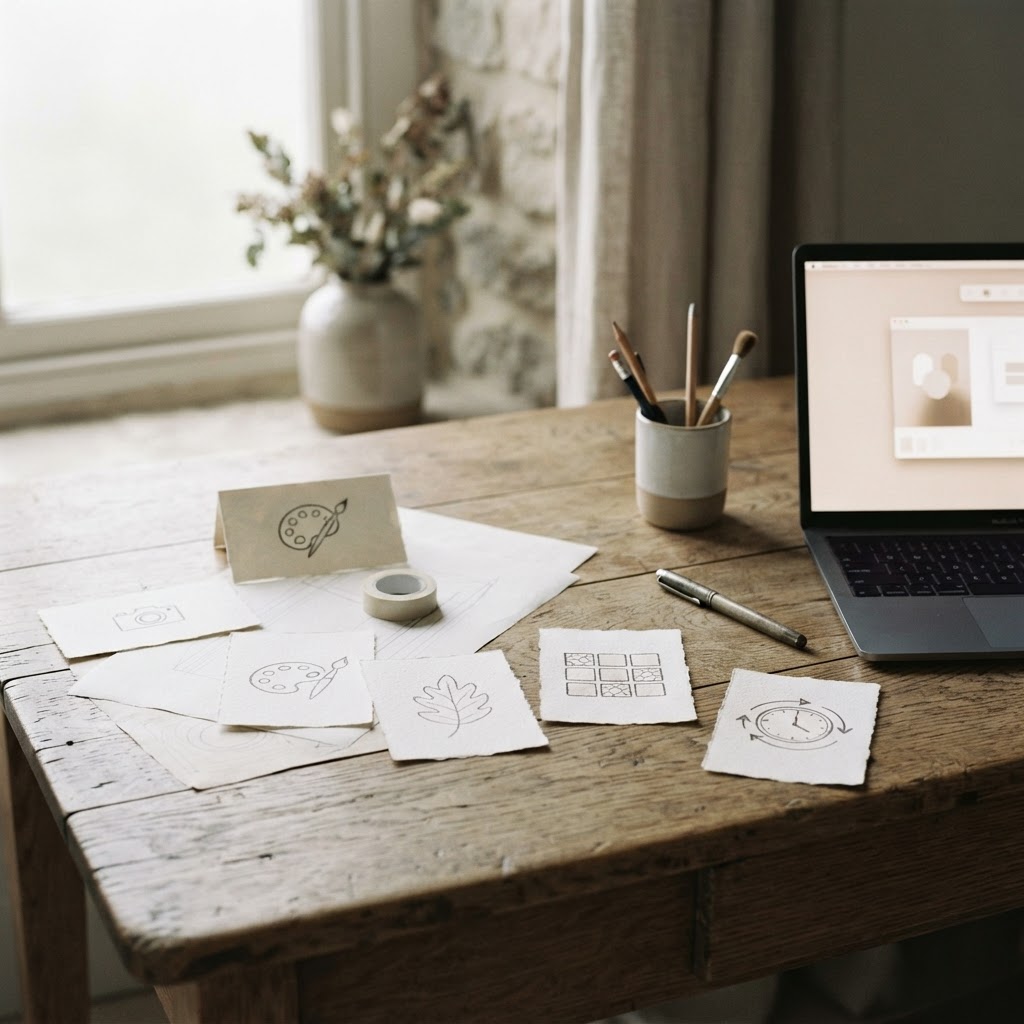
A digital studio has software infrastructure. Each app is a tool in the studio. Desktop Tracer is the light table. ArtFlow is the camera that documents the process. MUUZ is the reference shelf. Color Collector is the paint chip library. Mosaica is the pattern generator. DW8 Photography is the print archive and storefront. coDesign Compositor is the proposal desk. PersonaForge is the identity manager.
The studio isn't a place anymore. It's a system. And the system can be designed, built, and improved the same way you'd design, build, and improve a product.
The Difference
Here's the difference between a traditional studio and a software studio: the software studio gets better on its own.
When I fix a bug in the photography pipeline, the next 4,000 photos benefit. When I optimize the color extraction algorithm, every future palette is more accurate. When I add a new smart collection rule, thousands of photos self-organize. The improvement compounds in a way that physical tools don't. A better easel doesn't make your next 400 paintings better. A better pipeline does.
This is the unorthodox part: the studio itself is a creative artifact. The apps aren't just tools — they're expressions of the same creative thinking that produces the work. The pipeline's schema design is a creative act. The smart collection rules are curatorial decisions. The brand profile structure is an editorial framework. The studio-as-software collapses the distinction between making tools and making art.
The Portfolio as Practice
I have apps for photography, painting, design, writing, identity, commerce, and creative process. Each one serves a different part of the practice. But the value isn't in any individual app. The value is in the portfolio — the way they connect, the data that flows between them, the patterns that emerge when you see them as a system.
DW8 Photography generates AI metadata. That metadata — tags, colors, mood, composition — could feed into MUUZ's recommendation engine. MUUZ could suggest references based on the colors and moods I've been working with. Color Collector could extract palettes from the real world and feed them into Mosaica as mosaic patterns. ArtFlow could document the process, and the timelapses could feed back into the storefront as process content.
I haven't built all these connections. But the architecture allows for them, and that's the point. A software studio isn't just a collection of tools. It's a system where the output of one tool can become the input of another. The studio learns. It connects. It compounds.
What I'd Tell Someone Starting
If you're a creative person who also builds software, here's what I'd tell you: build the tool you need, not the tool you think you should build.
I didn't build a photography pipeline because I wanted to build a photography pipeline. I built it because I had 4,463 photos in Google Drive and no way to sell them. I didn't build a tracing tool because I wanted to build a tracing tool. I built it because I wanted to trace a reference image without printing it out.
Each tool started as a personal problem. Each tool became more general as it developed. The personal problem gave the tool its specificity. The generalization gave it its value beyond me.
The studio didn't come from a plan. It came from a pattern: encounter a problem, build a solution, generalize the solution, add it to the toolkit. Repeat 36 times.
The Studio That Builds Itself
The most interesting thing about a software studio is that the studio can build itself. The photography pipeline's AI generates tags and descriptions. Those tags and descriptions could train a model that generates better tags and descriptions. The timelapse tool captures process data. That process data could train a model that recognizes when a painting is stuck. The proposal tool generates brand-compliant text. That text could train a model that writes better proposals.
The studio's outputs become its inputs. The tools improve the tools. And the person who built the studio — the one who was supposed to be making art — is freed to do the thing that the studio can't do: decide what to make next.
That's the dream, anyway. In practice, the studio is messy. Some apps are half-finished. Some connections don't exist yet. Some tools were experiments that went nowhere. The portfolio is full of dead ends and abandoned projects.
But the dead ends are part of the practice too. The studio is a record of curiosity — 36 attempts to solve 36 problems, some of which turned into tools and some of which turned into lessons. The tools are the ones that worked. The lessons are the ones that didn't. Both are valuable. Both are the studio.
The Bigger Picture
The studio as software isn't a product. It's a practice. It's the application of creative thinking to the infrastructure of creative work — not just making things, but making the systems that make things easier.
This is what Unorthodox Creativity is about. Not the apps. Not the tools. The practice of treating your creative infrastructure as something you can design, build, and improve. The studio isn't a room with a north-facing window. It's a system that gets better every time you use it.
The studio as software. The practice as product. The infrastructure as art.
That's the thesis. Everything else is implementation.